


The Top 4 Mistakes We See With Using AI to Repurpose Content
You publish a blog article and want to get some more legs out of the content you spent time creating. (Aside: we’re with ya 🙌🏻)
You go to the AI tool of your choosing and ask it to make a version to post on social media.
The result checks the boxes:
✔️ it’s grammatically correct
✔️ it summarizes the content
✔️ it has a hook, cutlines and caption
You head to your favorite platform to post and… womp womp. It falls completely flat.
Why AI-Generated Social Posts Fail
When you’re asking AI to create a version of content for another platform without giving it any other context, you’re asking it to guess, and guesswork rarely produces great marketing.
Remember: AI is a tool that works on pattern recognition & directions, not a human who will think beyond the exact context you give it.
The good news here is that the same message absolutely can work across different platforms. The key is understanding why people come to each platform in the first place and making sure the execution of your message aligns with that intent.
Let’s take a look at the top four mistakes people make when using AI to repurpose their content, plus how to make sure your ideas can become many pieces of content without becoming the same piece of content everywhere.
Mistake #1: Giving AI Generic or Short Prompts
Nine times out of ten, when someone takes a blog post or other long-form content to AI for repurposing, the prompt goes something like this:
“Turn this blog into a LinkedIn post.”
Using this approach, AI will summarize, shorten, and reword your content. In other words, it will create a variation.
What you need is an adaptation.
Where a variation changes the wording, an adaptation changes the content to fit the audience, platform, and action you’re trying to generate.
Since AI’s output is only as good as the input it receives in the form of your prompt, the more specific your ask, the better the result should be.
Here’s a real life example of effective repurposed content
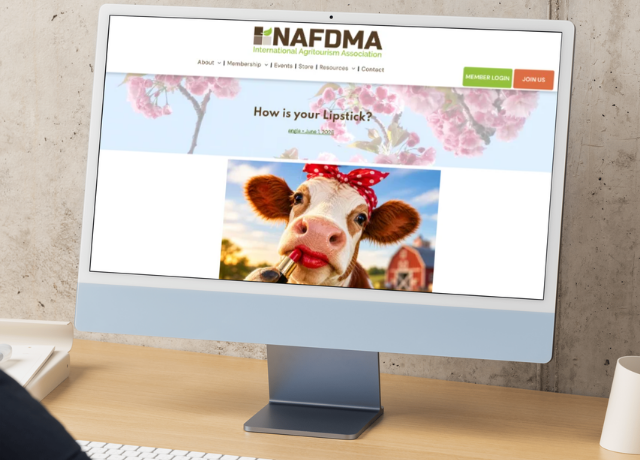
It started with a blog post written by our agritourism association client and posted on their website.
After it got shared to their weekly email list, the first avenue for disseminating new content, we then needed to repurpose it for sharing on Instagram. This meant turning a long-form content (the blog) into a short form content (video Reel.)
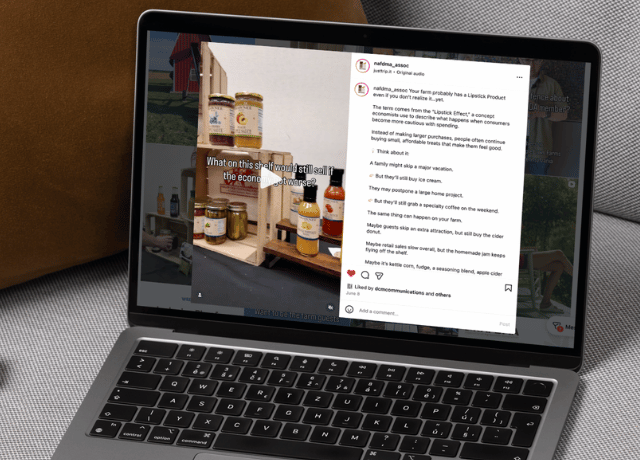
We wrote a strong curiosity hook to stop the scroll, added a few cut lines and then drove traffic to a more expansive caption, yet still shorter than the blog itself and formatted to be read on desktop OR mobile devices. (Click the image to view the full Reel in action.)
Same message, two separate formats for two different platforms.
Mistake #2: Assuming Every Platform Has the Same Job
While we may lump Linkedin, Instagram, Facebook, and others under the “social media” label, reality is a bit more complicated because each social media platform performs a different function.
Linkedin, for example, has an inherently professional audience. Users are looking for insights and opinions and they expect to see engaging discussions and expertise being shared.
Instagram has a good mix of personal and professional activity. It’s no secret that the platform is primed for rapid consumption, but it can also be a great place for connection.
And the OG, Facebook, is big on local and community interactions and tends to keep things more conversational.
Your audience may overlap across channels, but what (and how) they want to consume on each does not.
Mistake #3: Forgetting that Format Matters
Just as the reason for being on each social media platform is different, engagement on these platforms also looks different. This means the way your repurposed content is presented may need to shift as well.
AI may give you good bones to work with, but giving a little more attention to detail when it comes to formatting can go a long way. Let’s take a look at how engagement, and therefore formatting, shifts across platforms.
On Linkedin, engagement looks like:
➞ comments
➞ reposts
➞ professional debate
Linkedin users have a higher tolerance for slightly longer paragraphs. After all, if you’ve got good insights and opinions, you should have more to write! But make sure to include a line break every one to two sentences.
A professional tone is definitely expected, but that doesn’t mean you have to be totally devoid of personality. Well-placed, work-appropriate emojis and even a gif can help reinforce your point while showing your personality.
Engagement on Instagram and Facebook takes the form of:
➞ likes
➞ shares
➞ DMs
➞ saves
For Instagram, short is better. Each sentence gets its own paragraph and anything you can do to make scanning easier, do it.
This is especially important for lists. Use emojis help create separation and visual structure.
Facebook can be just a tad longer, but still needs to be concise and easy to scan.
Whatever action you want your readers to take on either platform, make sure it is abundantly clear and platform appropriate! URLs work great on Facebook where they show up as hyperlinks, but a URL is a no-go on Instagram (“Link in bio” please and thank you!).
Mistake #4: Letting AI Set the Strategy
While AI can be a great extra set of hands when you’re short on time or capacity, one piece of your marketing you should never let it dictate is strategy.
Instead of asking AI to “create 5 posts from this blog”, a better move is to pause and ask yourself a few questions before you prompt:
➞ What is the purpose of this content?
➞ Who is the audience on each platform?
➞ What action do I want them to take?
Armed with the answer of these questions, your prompt becomes something like this:
“Using this blog, create an Instagram caption optimized for saves and shares. Keep paragraphs to one sentence each, include a strong hook, and end with a question that encourages engagement.”
An even better move to make sure you’re operating from a sound marketing strategy, though, is to lean on professionals like the DCM Krewe 🙋♀️
The Bottom Line
Repurposing is at its most effective when the idea stays consistent and the execution adapts.
AI can create endless variations of your content, but effective marketing requires adaptations.
The difference between the two is often the difference between content that gets posted and content that performs.
Want help with this? Book a discovery call today.

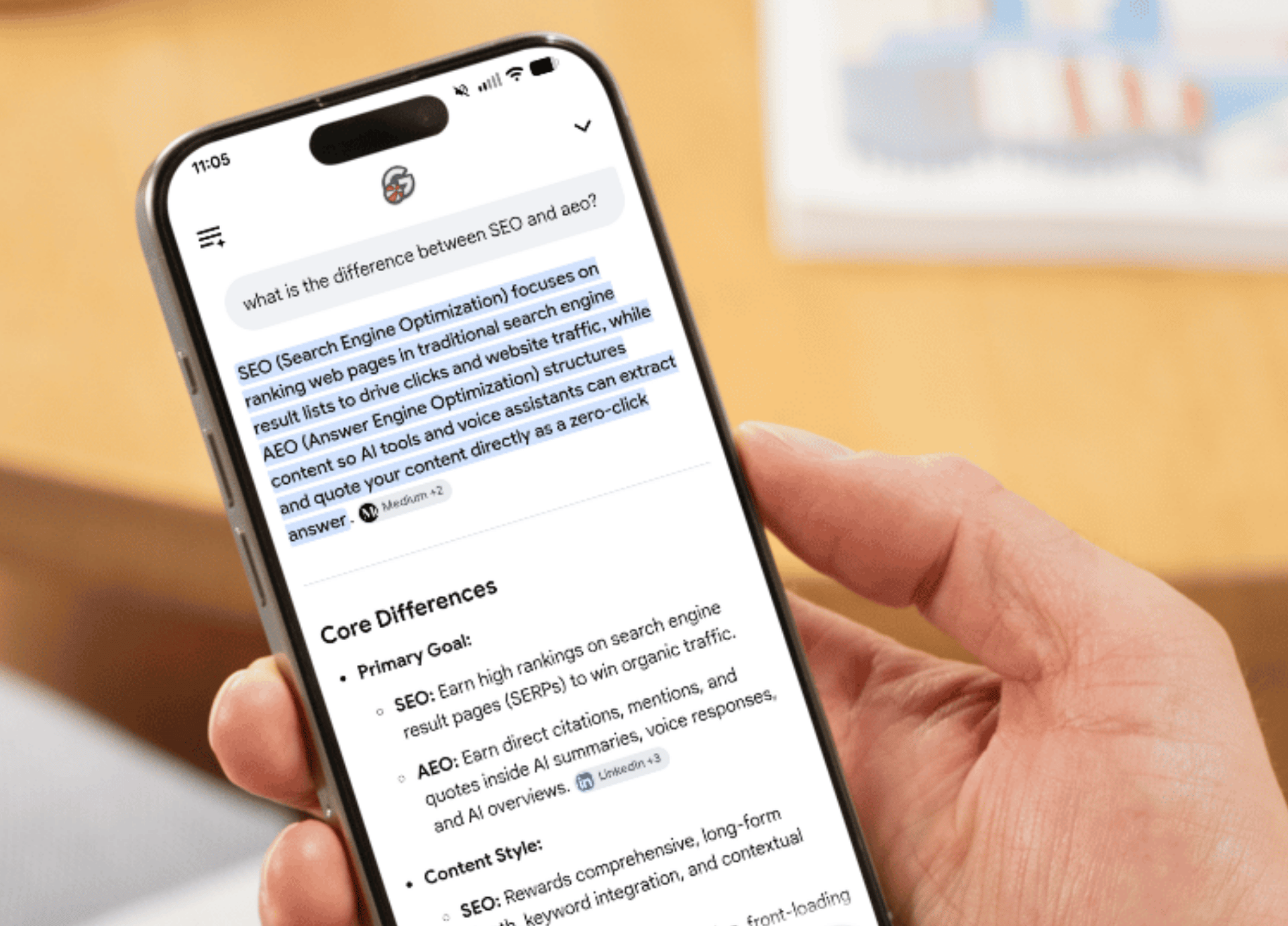
SEO vs. AEO: What’s the Difference?
AI is popping up everywhere, including in your search engine queries. So, how can

Why Most LinkedIn Newsletters Feel Forgettable (And How To Make Sure Yours Isn’t)
It's easier than ever to start a newsletter on Linkedin. But growing one is
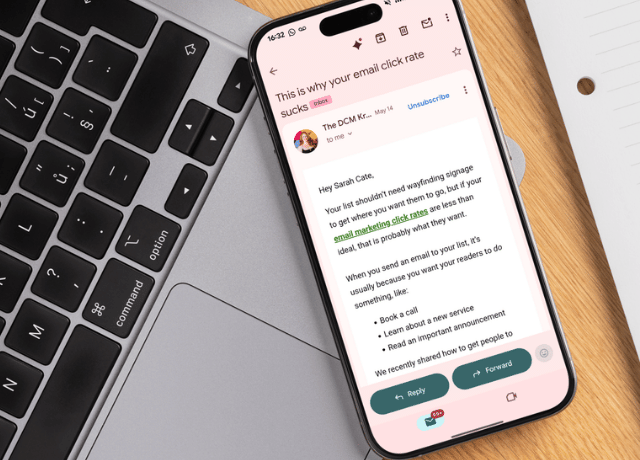
Your Email Branding Matters More Than You Think
Your email content matters a lot. But so does the way your email looks.