

What Your Open Rate Is Really Telling You (And How to Increase It)
Getting an email out to your audience can feel like a feat. You have something important to share or announce (because we never send an email without actually having something to say, right? 😉) and take the time to write just the right message.
You send a test, check the links, check the recipient list and off it goes. Success! This is where most small business owners stop and move onto the next task, BUT the real gold comes after your email hits readers’ inboxes, in the form of metrics.
Whether you glance at your email metrics, feel vaguely anxious, and quickly move on, or worse, you never look at them, each number is actually a clue pointing to one specific thing. Once you know what that one thing is, you can start to unlock the real audience nurture and customer conversion magic in your emails.
This is the first of a two-part series on what your email marketing metrics are really telling you about your content and community’s response.
What Open Rate Actually Is
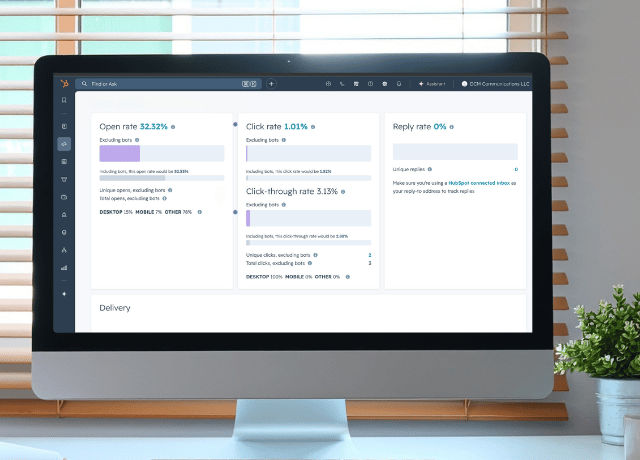
Open rate measures the percentage of your delivered emails that were actually opened.*
*Changes to privacy laws in the past few years mean that open rates are not as accurate as they once were, but they can still provide a very important baseline.
The DCM Krewe measures open rate for our own email sends and for our clients to inform ongoing marketing strategy. Even if the data isn’t 100% accurate, we can still identify jumps and dips that are worth noting.
The Importance of Strong Subject Lines
For your audience to open one of your emails, they need a compelling, interest-piquing idea of what they will find inside.
Enter: the subject line.
If your open rates are low (generally considered anything below 20% for B2B), the place to focus your efforts is improving your subject lines.
Done well, a subject line is clear, curiosity-driven, and fully aligned with the content of your email. Here’s what that looks like in practice along with what NOT to do:

The overarching idea with subject lines is to lead with the benefit, not the topic. People (even the most altruistic ones) want to know what’s in it for them if they take the time to open your email over all the others in their inbox.
Subject lines need to clearly set expectations of what the reader will find inside the email. If you promise something at the subject line level, you better deliver once they open!

Already wishing you could press an easy button to have someone handle all this for you?
Let’s talk!
Your Sender Name Matters More Than You Think
While subject lines are the primary driver of open rates, there are two other tweaks that could unwittingly be undercutting who opens your emails.
Your sender name is the little bit of text (not your email address) that lets your audience know who’s sending them an email. Your ESP (email service provider) lets you customize this, but be sure you don’t leave it to whatever the system defaults to.
➞ Building personal brand recognition? → “Jamie Reed”
➞ Solopreneur with a named business? → “Jamie at Bloom Co.”
➞ Established brand with strong recognition? → “Bloom Co.”
Some ESPs allow you to change the sender name at the account level (usually found in account or profile settings) and some even allow you to set up multiple sender names that you can select on an email-by-email basis.
Choosing the Correct Send Time
Knowing when your audience is most active can be the difference between more eyes seeing what you want them to see and… crickets.
First things first, think about who’s on your email list and what their daily schedule is like.
If your list consists primarily of personal email addresses for those who work a corporate day job, a very early morning send (pre-work hours) or an evening send may be your best bet. If your list is mostly corporate email addresses who will be checking email during business hours, a midmorning or lunchtime send may yield better results.
Your ESP may also provide you with open activity for your emails where you can see when more people are opening your emails. Some ESPs even analyze the data for you and provide you with the best send time for your particular list.
You may see blanket statements from marketing gurus about which send time is working best now, but it’s always best to use the data in your platform that’s tailored to your audience over generic advice – even ours 😉.
Once you have a hypothesis, whether from your ideal client’s persona or your ESP data, it’s time to test it.
As with everything in marketing, the key to increasing your open rates is testing. Pick a day and time of day and stick with it for a few sends. Measure your results, then pick another time you think will work for your audience and test again.
Your Open Rate Improvement Checklist
If your open rate is below 20%, work through this list, one at a time. If you start changing too many things at once, you’ll never know what actually caused the improvement:
➞ Rewrite your subject line with one clear benefit or curiosity hook
➞ Check your sender name. Would your audience recognize it immediately?
➞ Review your ESP’s send-time data and test your top window
➞ Make sure your subject line and email content are fully aligned
Open Rates Matter But They Aren’t Everything
When you stop looking at your email metrics, like open rates, as a report card and start seeing them as a feedback loop instead, you can begin to make small, sustainable (but realistic!) changes.
And once you see improvement in those open rates, the next task is to get them to click through to your landing page, which is precisely what we’ll dive into in Part 2 of this series.
If you’re ready to have expert eyes dive into your email marketing metrics and make a plan to increase your open rates and more, we can help you read between the lines. Book a discovery call.


The Top 4 Mistakes We See With Using AI to Repurpose Content
AI makes it easy to repurpose content but there are four mistakes we see

Why Most LinkedIn Newsletters Feel Forgettable (And How To Make Sure Yours Isn’t)
It's easier than ever to start a newsletter on Linkedin. But growing one is
Your Email Branding Matters More Than You Think
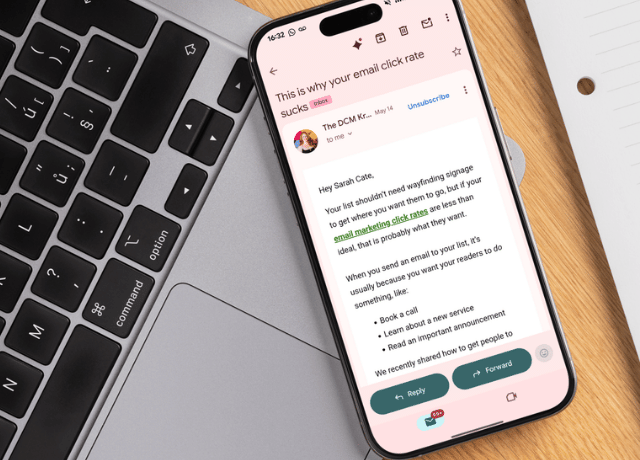
Your email content matters a lot. But so does the way your email looks.