


Branding vs. Marketing vs. Public Relations: What’s the Difference?
Branding, marketing, and public relations are closely related, which explains why people often use the terms interchangeably. But they’re not the same thing, and understanding the difference can help you make smarter decisions about where to invest your time and resources.
Here’s the short version:
➞ Branding shapes how your business is perceived.
➞ Marketing puts your business in front of the right people.
➞ Public relations earns the credibility that makes people believe what they hear.
What Is Branding?
Branding is the foundation everything else is built on. Before you start printing business cards, posting on Instagram, or pitching the media, you need to know who your business is, what makes it different from everyone else, and why customers should choose you over the competition.
A strong brand gives your team a shared direction (aka boundaries) and customers a clear understanding of who you are, what you offer, why it’s better than the competition and what they can expect every single time they interact with your business.
It’s also what will keep you top of mind when someone asks a friend/colleague “Who do you recommend for [insert service you provide]?” Or “I’m finally ready to hire someone to [INSERT SERVICE], I’ll reach out to [insert your company]”
A good brand (paired with marketing & PR) will become sticky in someone’s mind. Sticky is memorable.
What branding includes
A complete brand typically includes:
➞ Positioning: What space do you occupy in the market, and why should customers choose you?
➞ Messaging: How do you communicate your value clearly and consistently?
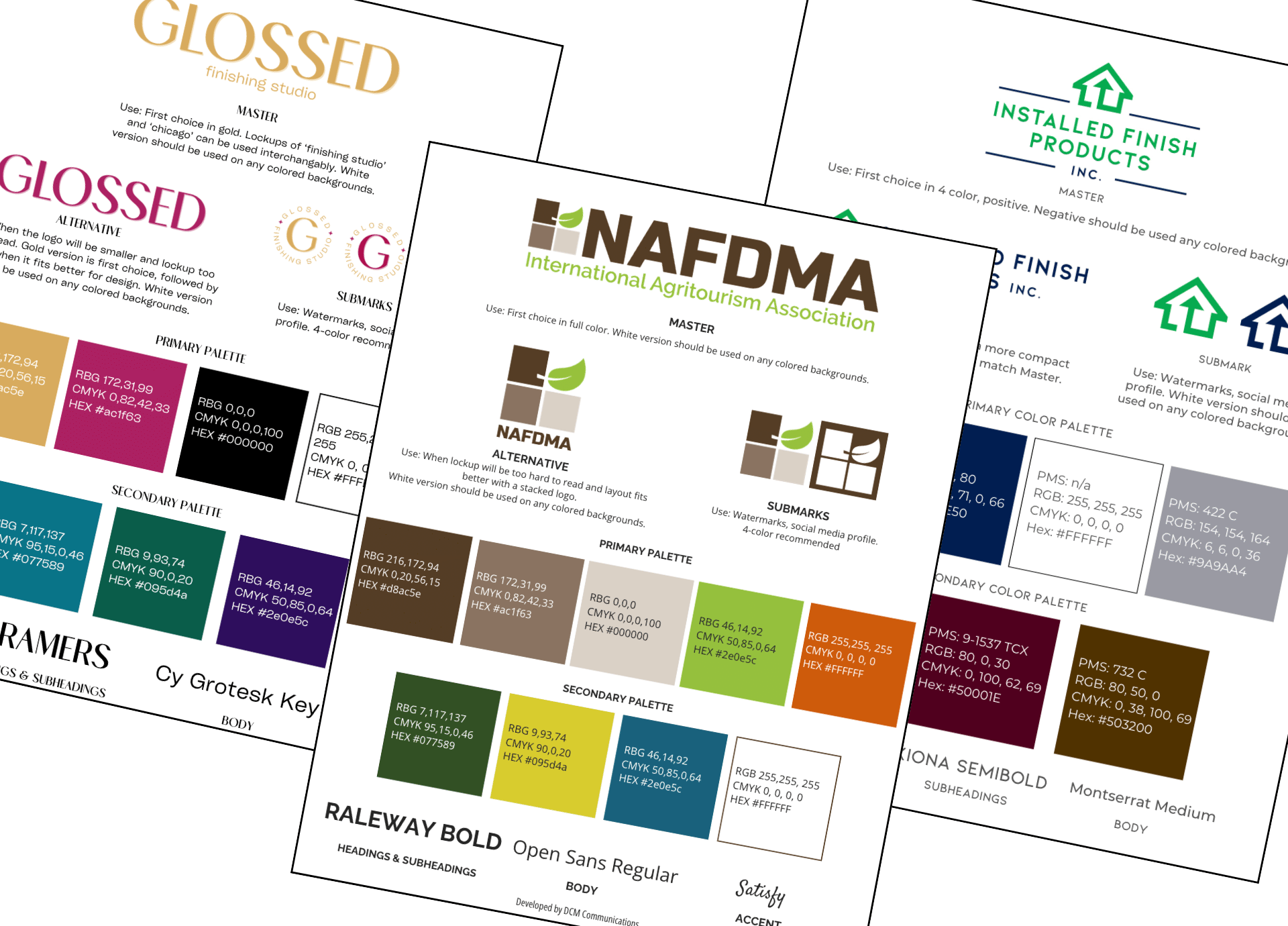
➞ Visual identity: Your logo, colors, typography, photography style, and other visual elements.
➞ Brand voice: The personality and tone your audience experiences everywhere they encounter your brand.
The goal here isn’t to make every single graphic look the same, but rather keep your overall personality & style consistent. Consistently branding leads to trust and if they trust you, they’ll buy from you.
When done well (and consistently), these elements build a brand that’s recognizable, memorable, and ready to grow.
Common branding misconceptions
One of the biggest misconceptions is that a brand is simply a logo.
A logo is an important part of your visual identity, but it isn’t your brand. Your brand is the complete communication experience people have with your business, from your website and social media to the way you write in emails and show up at in-person events.
The same goes for colors and fonts. If you use new fonts & colors every time you send an email, create a flyer or post on social media, your audience won’t recognize you – or worse – think you’re a bit of a hot mess.
Visual consistency matters in order to create a clear, consistent perception that sticks in your client’s mind. (Think of Nike and you immediately think of the swoosh right? THAT is consistent branding.) Reinforcing that perception is where the visual elements come into play.
What Is Marketing?
If branding defines who you are, marketing is how you introduce that brand to the people who need it.
Marketing covers the strategies and tactics you use to attract attention, generate qualified leads, and move potential clients towards becoming paying clients (and hopefully raving fans).
When it’s done well, marketing creates visibility with the right audience.
Common marketing tactics
Marketing can take many different forms depending on your business and goals, including:
➞ Website optimization
➞ Search engine optimization (SEO)
➞ Answer engine optimization (AEO)
➞ Paid advertising
Each tactic serves a different purpose, but they all work toward the same goal: helping the right people find your business at the right time.
How marketing supports business growth
Effective marketing helps businesses do five core things:
1. Increase brand awareness: They can’t buy from you if they don’t know you exist.
2. Generate qualified leads: All leads are not created equal. You want qualified above all else. Otherwise you waste precious time with tire kickers who will just make you crazy.
3. Educate potential customers: This is how you qualify them before ever getting on the phone. The wrong ones will weed themselves out and the right ones will see your content and think “OMG That’s me!”
4. Nurture leads over time: It still takes an average of 12 touches with a company before someone makes a buying decision. This is where nurture campaigns come into play and lead towards…
5. Convert interest into action: This is where the nurturing (aka repeated exposure to the brand over time) of a casual viewer, follower, or email list member pays off and they find themselves ready to take action: filling out the contact form, requesting the proposal, booking the discovery call etc.
Without marketing, even the strongest brand may never reach the people it’s meant to serve when they are ready to buy.
And before you say “We don’t need marketing. All our business is from referrals,” let me assure you: that is marketing, friend. That is a low-effort marketing engine created because of a consistent brand identity pushed to the right people so they now are brand ambassadors for you.
What Is Public Relations?
Public relations builds your brand’s credibility and helps shape how your business is perceived by clients, industry peers, and the broader community through earned media.
What PR includes
Public relations often includes all or any of the following:
➞ Media relations
➞ Award submissions
➞ Community involvement
➞ Thought leadership
Each of these opportunities helps reinforce your expertise and build trust with your audience.
How PR builds credibility
People naturally trust recommendations and recognition from third parties more than advertising alone.
Think of it like this:
You can walk into a new high school and say “Oh hey! I’m a cool kid,” but you are actually the new kid so why would anyone believe you.
BUT… if the BMOC (big man on campus) invites you to sit with him at lunch you are by association a cool kid.
So when your company is featured or quoted in a respected publication, wins an industry award, or is invited to speak at a conference, those achievements provide validation that strengthens your reputation.
That credibility also makes your marketing more effective because potential clients are more likely to believe what others say about you than what you say about yourself! (This is also why the creator economy is continuing to blossom and more brands are tapping into user generated content.)
How Branding, Marketing and PR Work Together
The goal with these three disciplines is to complement one another rather than compete.
Each plays a different role in helping prospects move from discovering your business to becoming one of your biggest fans.
Why each one matters
➞ Branding helps people remember you
➞ Marketing helps people find you
➞ Public relations helps people trust you
When one piece is missing, the others naturally become less effective.
You can have excellent marketing, but if your brand lacks clarity, people won’t remember what makes you different.
You can have a beautiful brand, but without marketing, few people will ever see it.
You can invest heavily in both branding and marketing, but without third party credibility, prospects may still hesitate to choose you.
The strongest businesses invest in all three in order to move people smoothly from knowing you to liking you and trusting you. THAT is when they buy.
A real-world example
Imagine you’re searching for a local remodeling company.
You first discover one through a Google search or social media post. That’s marketing doing its job.
When you visit their website, the messaging is clear, the visuals feel professional, and everything communicates quality and expertise. That’s branding.
As you continue researching, you notice they’ve been featured in local publications, received industry awards, and regularly speak at community events. Those independent endorsements give you additional confidence in your decision. That’s public relations.
Individually, each discipline creates value. Together, they make it way easier for customers to choose your business over another.
Frequently Asked Questions
No. Branding defines who your business is and how it’s perceived. Marketing promotes that brand to attract and convert customers. Marketing is most effective when it’s built on a strong brand foundation.
Marketing and public relations are often in the same department in Corporate America,, but they’re separate disciplines with different goals. Marketing focuses on driving awareness and generating and nurturing leads, while public relations focuses on building credibility, trust, and reputation. Together, they strengthen one another.
Most businesses benefit from starting with branding. A clear brand strategy provides the foundation for every marketing campaign and PR effort that follows. Once your positioning and messaging are established, marketing and public relations become much more effective because they’re communicating a consistent story.
Branding, marketing, and public relations each serve a different purpose, but they all work toward the same goal: helping the right people discover your business, trust what you offer, and choose you over the competition.
At DCM Communications, we know the strongest results happen when these disciplines work together instead of in silos. Whether you’re building a new brand, refining your marketing strategy, or looking to increase your visibility, success starts with understanding how each piece supports the next.

Is It Time to Rebrand Your Business? 4 Signs to Look For
If your business has changed but your brand has not, it might be time

When Should You Hire a Marketing Agency? 5 Signs You’re Ready
When marketing tasks keep getting pushed to the bottom of the list month after

A Slow Month Isn’t a Wasted Month: 5 Marketing Tasks to Tackle Now
A slow month doesn't have to be a wasted month. Learn what marketing tasks