




3 Marketing Assets That Actually Drive Revenue
Updated Sept. 10, 2026
There’s a reason marketing feels hard for a lot of small business owners.
Executing effective marketing requires time and consistency. If you’re not actually seeing results from it, it becomes the first thing you stop doing in favor of the million and one other things on your plate – particularly if you are a solopreneur or small team.
But when marketing does work? Oh the feeling 🙌🏻 That’s when you tend to remember it’s the one thing you can’t afford to roll off your neverending to-do list.
The problem most small businesses run into isn’t that they need to send more emails or post every day on social media. Instead, it’s that the marketing pieces they do have in place are not working together.
So, what marketing assets does a small business actually need? A strong marketing foundation comes down to three core assets: a positioning-driven website, an email marketing system, and a consistent content engine. Together, they help you attract the right people, turn them into leads, and stay connected until they’re ready to buy.
Of course, there’s more here than meets the eye. Let’s take a closer look at each and how they work together to amplify your message and your bottom line.
How Your Website Helps Generate Leads and Revenue
Your website should be doing more than just proving your business exists. A positioning-driven website helps the right potential clients quickly understand what you do, who you help, and why they should choose you. Then it gives them a clear path toward becoming a lead.
Websites come in all shapes and sizes. There’s no shortage of options, like Squarespace, WordPress, and Showit, when it comes to choosing where to build and host your website.
But the thing most websites get wrong isn’t the platform, the font, or even the colors chosen – though believe me we have seen all of the above (and fixed it 😉). It’s being unclear on your positioning.
While it may be more exciting to jump into figuring out the bells and whistles and appearance of your online storefront, in order for it to be effective, you need to first hammer out details like:
➞ who your ideal client is
➞ what they’re struggling with, and
➞ the way you talk about how you can help them better than anyone else.
Get those things right, and your website becomes the asset that draws your ideal client in, pre-qualifies leads, shortens sales cycles, and builds trust before you ever get on the phone.
How Your Email Marketing Turns Leads Into Customers
Email marketing gives you a way to keep building trust after someone has shown interest in your business. Instead of relying on them to remember you or hoping they happen to see your next social post, you can nurture the relationship directly in their inbox until they’re ready to take the next step.
If you’re already doing email marketing, great! But there’s a big difference between sending some email blasts every few months and treating email marketing like an integral part of your marketing machine.
A random send every now and then isn’t going to add up to more leads, better leads, or more sales. And to the people who do receive those emails? It signals that your brand is just as inconsistent on the inside.
A strategic email marketing program, though, can:
➞ welcome and nurture new leads,
➞ help you tailor your message to different audiences with segmentation, and
➞ re-engage inactive contacts with a win-back campaign
Underutilizing your email system is costing you, in time, leads, and revenue you didn’t know you were leaving on the table.
How Content Marketing Helps Generate Revenue
Content marketing helps potential clients find you, understand your expertise, and build trust in your business even before they’re ready to buy. For content to support revenue though, what you create and share needs to connect to your larger marketing strategy and have a consistent way of reaching the right audience.
First things first, you need a compass to guide what content you create and when you share it. That’s where content pillars come in.
Creating content around solid, brand-aligned content pillars—aka the topics you talk about consistently—will ensure that every piece you publish is working for your business.
Beyond pillars, being honest about your capacity and resources to create content is the first step to outlining a repeatable process to distribute your content. Because creating without distributing is just talking to your phone.
Content marketing may feel like a frivolous part of your marketing plan with its trends and b-roll style videos that tend to dominate your feed, but when it’s connected to your strategy, it does more work than you think, like:
➞ building authority,
➞ driving traffic to your website, and
➞ clearing the path to conversion
When it comes to content creation, consistency beats virality any day.
How Your Website, Email and Content Work Together to Generate Revenue
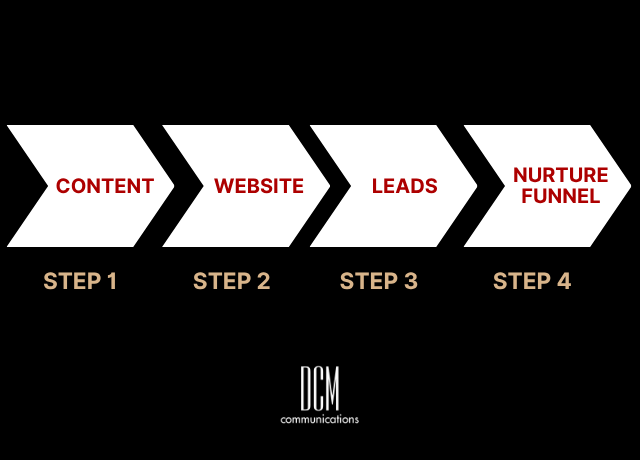
The real value of these three marketing assets comes from how they work together. Content attracts potential clients, your website turns that attention into leads, and email helps nurture those leads toward a sale.
Let’s bring it home.
1. The aligned content you publish drives more traffic to your website.
2. Your website, built around dialed-in positioning, converts casual visitors into leads who hand over their email addresses.
3. Those email addresses go into your email marketing system where you nurture them, build trust, and close the deal.
Do you need all three marketing assets at once?
Not necessarily. If you’re a small business owner doing most of your own marketing, trying to overhaul everything at once is probably a good way to ensure none of it gets done (#relatable). Start by identifying the weakest point in the system and focus there first.
TL;DR – This Is Not About Doing More Marketing
It’s about building marketing that works while you sleep.
The business owners who that feel like they’re constantly running to keep up with the Kardashians (😱) are usually the ones with campaigns, but no foundation.
Every lead feels like a hustle, every slow month feels like a crisis. Because when you don’t have infrastructure, everything depends on you being on and let’s be real: it’s exhausting!
The businesses that grow steadily, the ones that generate leads consistently, close sales more easily, and retain clients longer, have built the three assets we just walked through. (#speakingfromexperience) Maybe not perfectly, or all at once. But intentionally.
So here’s your audit check list:
➞ Which of the three is the weakest point in your business right now?
➞ Is it your website? Are you still presenting your business the way it looked two years ago?
➞ Is it your email system? Or lack thereof?
➞ Is it your content? Are you creating when you have time instead of building it into a real engine?
If you aren’t sure where to start, that’s exactly what we’re here for. Book a discovery call.

Is It Time to Rebrand Your Business? 4 Signs to Look For
If your business has changed but your brand has not, it might be time

The Top 4 Mistakes We See With Using AI to Repurpose Content
AI makes it easy to repurpose content but there are four mistakes we see

Why Most LinkedIn Newsletters Feel Forgettable (And How To Make Sure Yours Isn’t)
It's easier than ever to start a newsletter on Linkedin. But growing one is